The central base
Connaught Place
Central and well connected
- NearMarkets and food
- Bus startSightseeing bus
- Tourism officeReservation office
Clickable checklist
Private Old and New Delhi city tour
★ 4.9 · 5,615 written reviews
Quick summary
A trip to New Delhi works best from October to March, with Connaught Place as a central base, the metro for getting around and 4 to 7 hours for a guided city day.
Plan at a glance
Checklist · 8 tasks
Check things off as you go; your progress is kept on this device.
0 / 8 ready
All ticked. Only the booking is left: your date, your hotel and your group.
Get a seatA trip to New Delhi goes better with the right base and the right month. This page covers the areas to sleep in, how to move around, the climate by month and what to do with one day.
Editorial team, delhicitytour.click · Updated November 7, 2026 · Read in 7 min
Summary view
New Delhi is the capital's planned district, and a trip to New Delhi usually means the whole of Delhi: the old walled city, the avenues of the capital, the tombs and gardens to the south, and a modern city around them. The national tourism board says Delhi is home to 8 historic cities that were built, destroyed and rebuilt, which is why the sights are scattered and why a good base matters.6
Start the plan with three choices: the month, the base and the pace. The month decides how much you can do outdoors, the base decides how many hours you lose in traffic, and the pace decides whether you try to see everything or pick a handful. This page takes them in order, then ends with a one-day outline and a first-timer checklist you can tick off before you land.
Delhi rewards slow travel in the cooler months and punishes heroics in the hot ones. Delhi's magic unfolds in the cooler months, from October to March, according to the national tourism board.7 If you can choose, travel then, keep your first day light and keep your last day free for shopping and a long meal.
Delhi Tourism says the best time to visit Delhi is from October to March.1 The NOAA station at Safdarjung in New Delhi supports that with numbers: an average daily high of 20.3 °C in January and 22.9 °C in December, against 40 °C in May.15,15,15 The table above shows all twelve months, with sun hours, highs, lows, wet days and rainfall.
The monsoon is the other season to plan around. The same station records 93 mm of precipitation in June, 236 mm in July, 262 mm in August and 134 mm in September.15,15,15,15 Rain does not close the city, but it slows the roads and turns courtyards slippery, so pack a light waterproof and expect some plans to move under cover.
The dry months have their own character. November has 4 mm of precipitation and 0 wet days at the station, October has 14 mm, and the average daily high drops from 33 °C in October to 28.2 °C in November.15,15 Those months are the most comfortable for long days on foot, and they are also when visitors are most numerous, so book ahead.
Where to stay in Delhi for tourists depends on what you want to be close to, because the city spreads over a large area. Delhi Tourism sorts places to stay into 5 star hotels, 4 and 3 star hotels, bed and breakfasts and budget accommodation, and keeps a list of registered B&B establishments.19,20 We sell no hotels, but the choice of area decides your days more than the choice of room.
Connaught Place is the central pick. It is a hub with a wide range of food, one of the city's vibrant markets, the starting point of the Delhi Tourism sightseeing bus described in its older Citizen Charter, and the address of Delhi Tourism's central reservation office.2,16,21,22 From here the metro reaches most parts of the city.
Other bases suit other trips. The Paharganj side of New Delhi Railway Station has a Delhi Tourism information counter near Exit Gate no. 1, which suits an early train.3 Khan Market and Hauz Khas Village are named as trendy neighbourhoods for a modern take on Indian flavours, and Old Delhi puts you at the heart of Chandni Chowk.17,10 Your arrival and departure points should also weigh in the choice.
Match the base
Choose the line that sounds like you and the answer sits beside it.
If I want to be central
Connaught Place
If I arrive by train and leave early
Paharganj side of the station
Delhi Tourism has a counter there, near Exit Gate no. 1.3
If I want street food on the doorstep
Old Delhi
Chandni Chowk is the heart of Old Delhi for street food.10
If I want cafes and a calm evening
Khan Market or Hauz Khas
They are named trendy neighbourhoods for modern Indian flavours.17
If I fly in late
Stay near the airport
The airport lists cab, metro and private car for the commute.18
Three bases
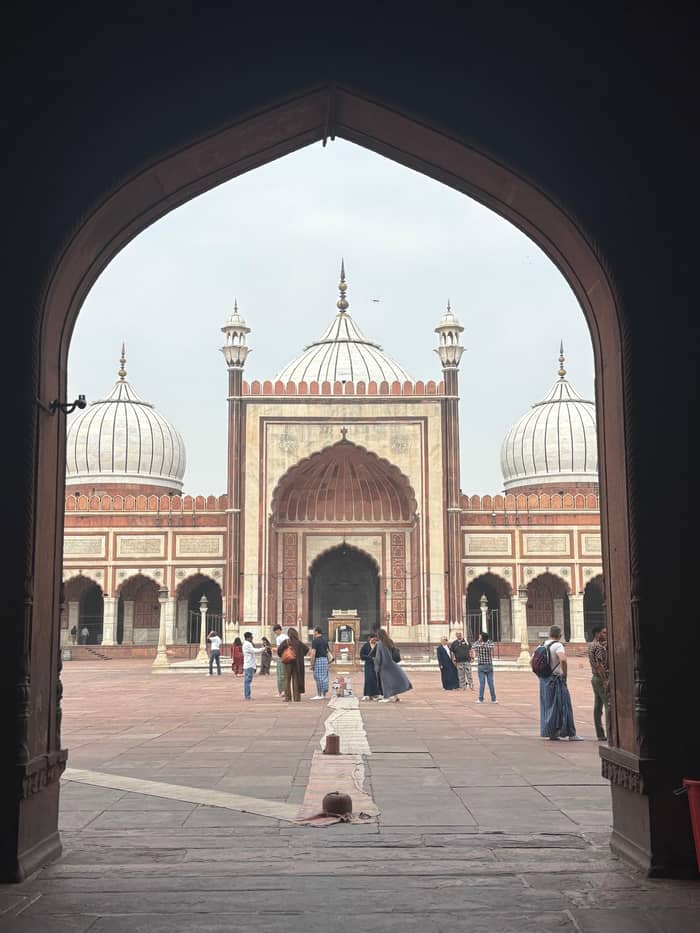
The central base
Central and well connected
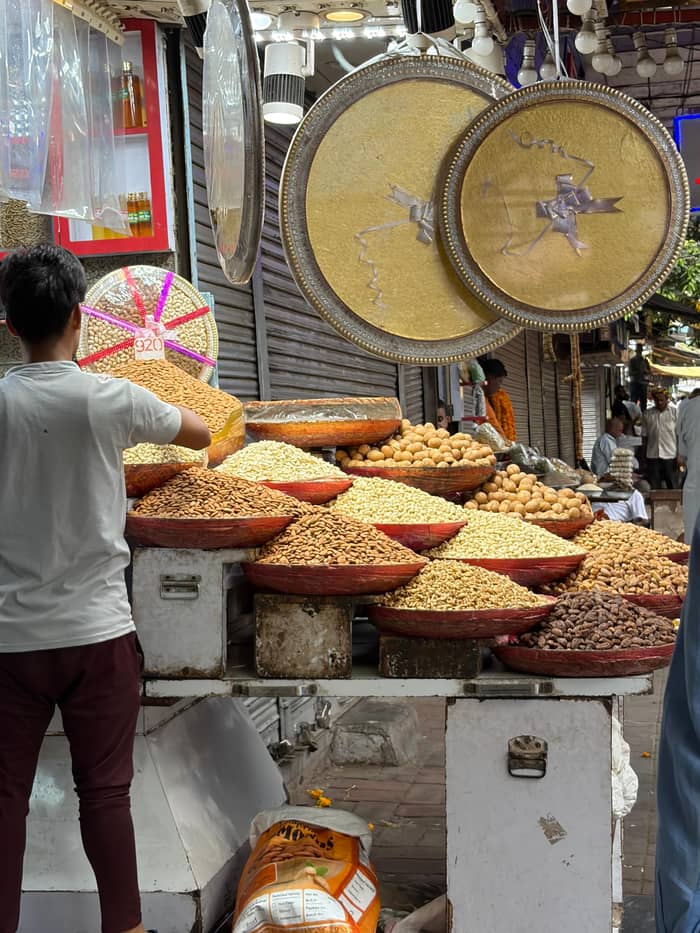
The old-city base
Among the lanes and markets
The relaxed base
Cafes and modern food
Delhi Tourism lists four ways to get around: auto rickshaws, buses, cabs and the metro.4 The Delhi Metro is a rapid transit system serving Delhi, Gurgaon and Noida, and the national tourism board calls it a clean and efficient lifeline connecting the city and nearby areas.35,36 For a visitor it is the least stressful way to cross town in the middle of the day.
The metro has a Tourist Card for unlimited travel over short periods, in 1 day and 3 day versions, and a helpline that is staffed for 24 hours.37,32 Check the current card price on the metro's official site before you buy, since the figures on older pages vary. For the last mile to a lane or a gate, an auto rickshaw or a cycle rickshaw does the job, and the latter is a fun way to see the narrow lanes of Old Delhi.38
Agree the fare or insist on the meter before you set off, keep small notes for the driver and have the address of your hotel written down in both English and Hindi. When traffic is heavy, the metro beats any car. For long days with a lot of stops, a private tour with a car and a guide takes the logistics out of your hands.
A day in the capital
Early
Late morning
Chandni Chowk is the heart of Old Delhi for spices, sweets and street food.10
Midday
Connaught Place offers a global range of food.2
Afternoon
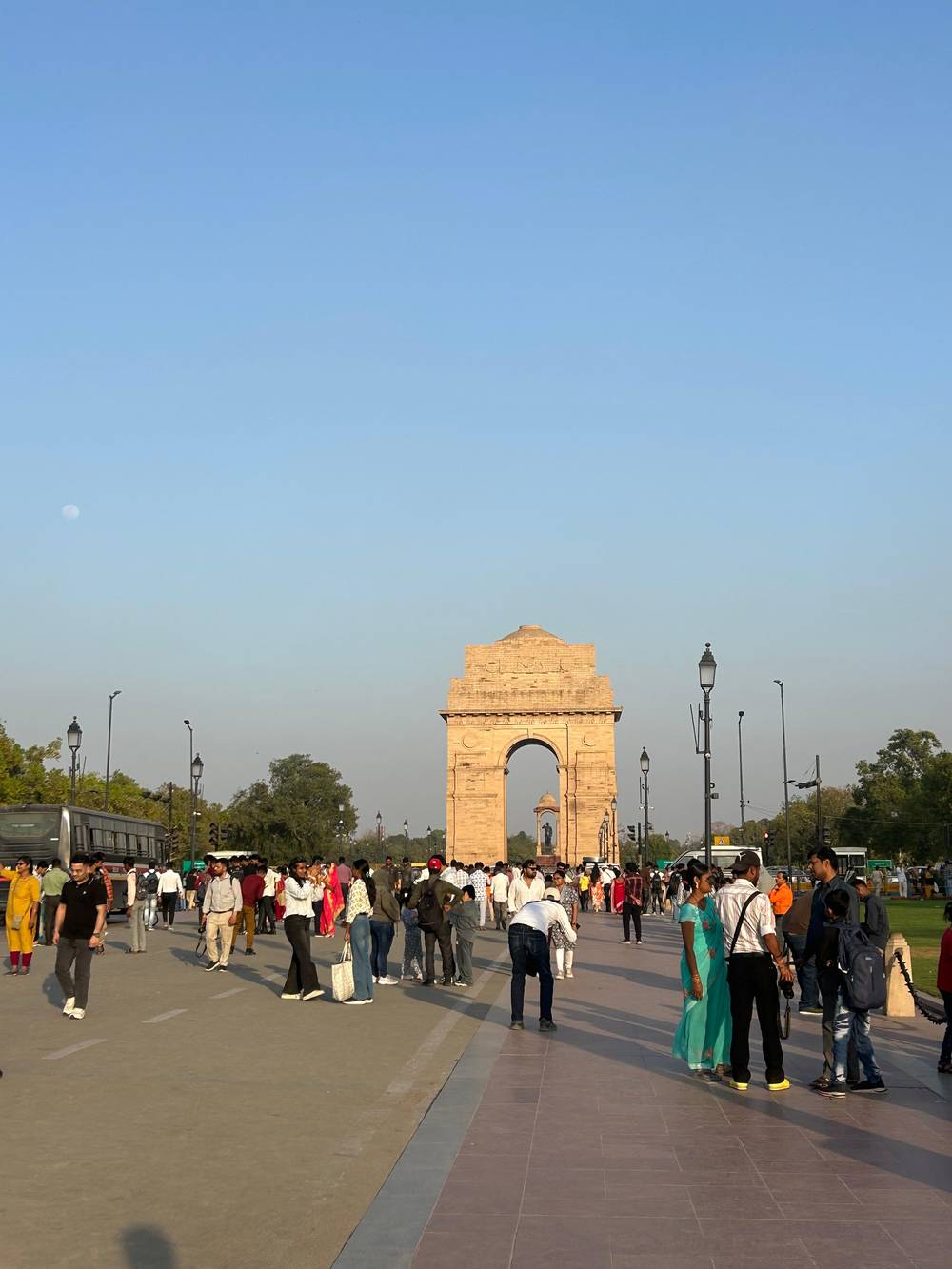
India Gate and the National War Memorial sit in central New Delhi.11,12
Late afternoon
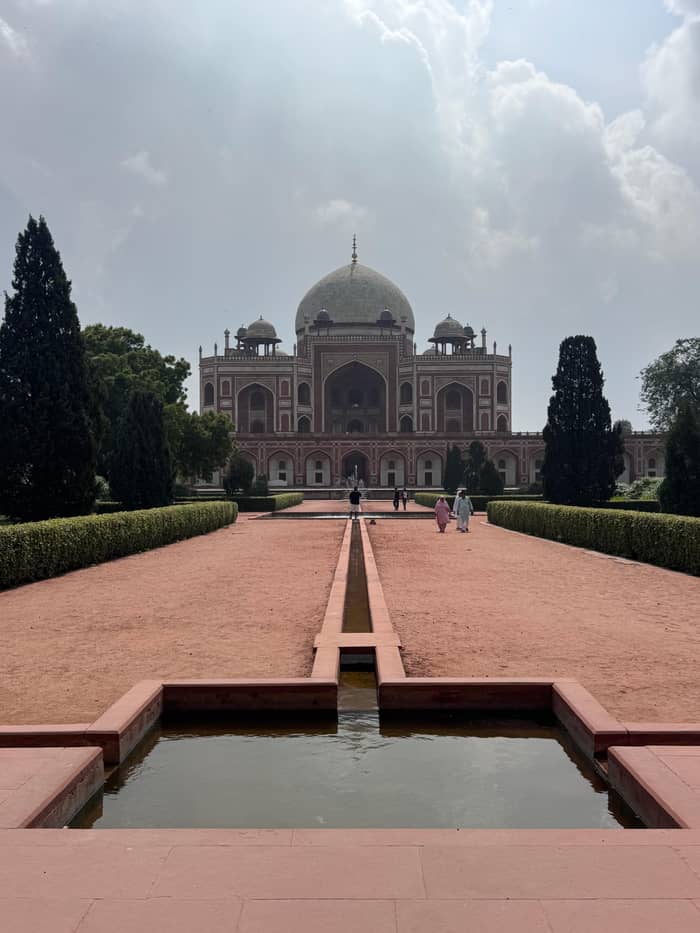
Humayun's Tomb is a 16th-century garden mausoleum.13
Evening
The Red Fort has an evening sound and light show, Jai Hind.14
Delhi Airport lists three terminals, Terminal 1, Terminal 2 and Terminal 3, and gives cab, metro and private car as ways to commute to the airport.5,18 It also offers meet and greet services.39 After a long flight, a pre-booked car or a hotel pick-up is the easy choice, and the metro is the cheap and traffic-proof one.
If you arrive by train, Delhi Tourism has an information counter at the Paharganj side of New Delhi Railway Station, near Exit Gate no. 1, and another at Domestic Airport Terminal 1.3,40 These counters give information on monuments, museums, markets and events, and on how to reach tourist places by road, rail or air.33 Use them for the first questions rather than someone on the street who offers to help.
Leave a day of slack at each end. Flights land late, trains run behind and the road from the airport can be slow. The Old & New Delhi tour sold on this site lists collection from a hotel or the airport in Delhi and in the neighbouring cities of Noida, Gurugram, Ghaziabad and Faridabad, so a half day tour can double as a transfer on a layover day.
Video
Tina Huegel on YouTube · Until you tap play, no video is loaded.
The best time to visit Delhi is from October to March when the weather is at its best.
A one-day trip to New Delhi works if you pick a theme. A guided day covers both halves: the Old & New Delhi tour lasts from 4 hours to 7 hours depending on the version, with a half day for New Delhi, a half day for Old Delhi and a full day for both. It is listed from $37 per person for a private tour of up to 15 travelers.
If you plan the day yourself, start in Old Delhi before the heat: the Red Fort and Jama Masjid, then Chandni Chowk for food.8,9,10 Move to central New Delhi for India Gate and the National War Memorial, which the national tourism board describes as a symbol of courage and a tribute to the Armed Forces.11,12
Finish in the south with Humayun's Tomb, a 16th-century garden mausoleum, or with Lodhi Garden and Sunder Nursery if you want green space and a place to sit.13,28 Pick one sight per block and let the rest go. A day with three well-chosen stops beats a day with eight rushed ones, and the map on this page shows how the blocks sit.
Carry a bottle of water, a hat, sunscreen and a light scarf or shawl. Dress for mosques and temples with covered shoulders and knees, and expect to take off your shoes at the door. Gurudwara Bangla Sahib has a langar, a community kitchen that serves all who come.26
Bargaining is a Delhi shopping tradition, unless prices are fixed, so a friendly counter-offer is normal in the bazaars.34 Keep small notes, carry little cash on your person, and keep a copy of your passport apart from the original. If you eat street food, choose busy stalls and bring hand sanitiser, and ask your hotel which places they trust.
Before you fly, check visa and entry requirements on official government sites, and keep your hotel booking and your first-night address ready. Save the Delhi Metro helpline, 155370, and the Delhi Tourism central reservation office address on your phone.32,22 A few minutes of preparation at home saves hours in the first days of the trip.
FAQ
Delhi Tourism says the best time to visit Delhi is from October to March.1
Delhi Airport lists cab, metro and private car as ways to commute to the airport.18
The Old & New Delhi city tour lasts from 4 hours to 7 hours depending on the version.
Sources
Read next
Questions about the Delhi day? A real person answers here.